

Warwick Woodley
Top 50 International Shipping Companies of 2026: Complete Data-Driven Analysis
Our comprehensive analysis of the world's leading international moving and shipping companies, ranked by market presence, service coverage, certifications, and customer satisfaction. Includes detailed comparison data, pricing insights, and expert recommendations.
International ShippingMoving CompaniesIndustry AnalysisFIDIRelocations
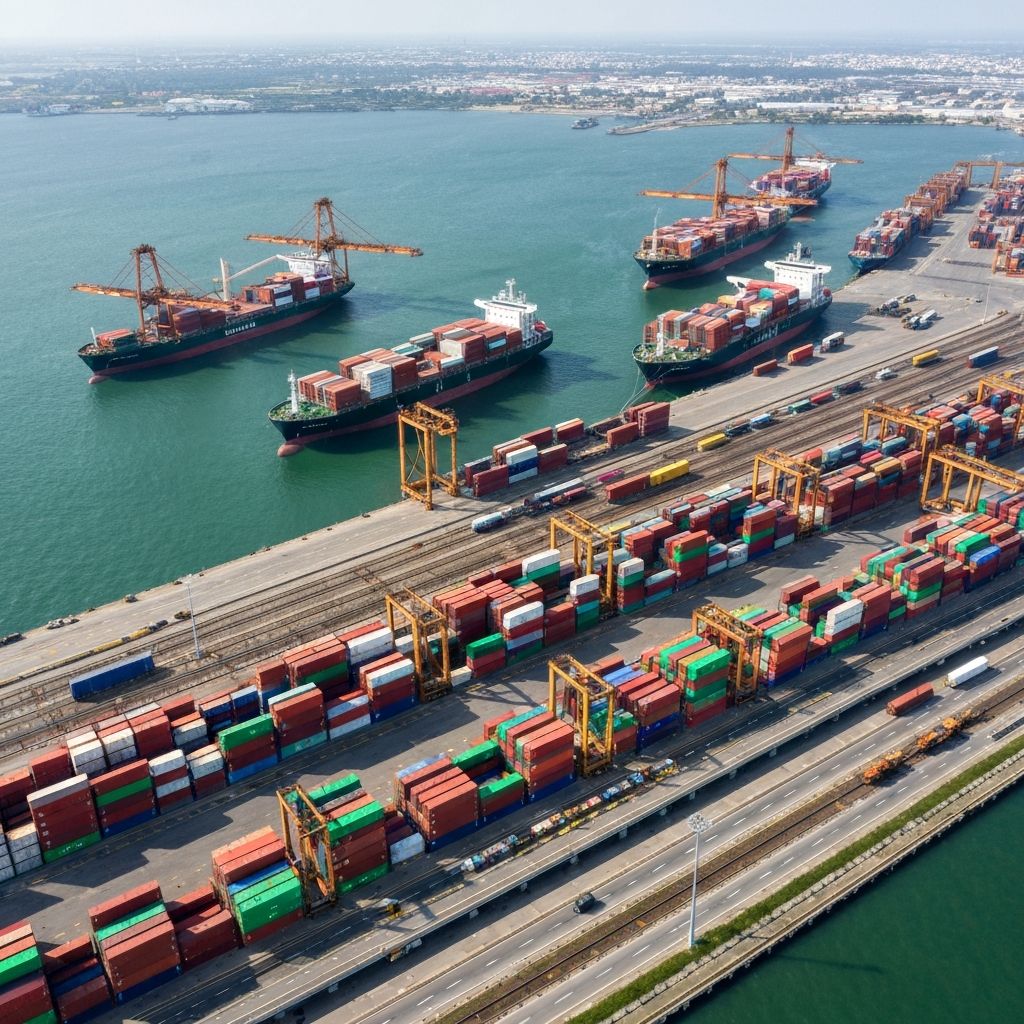
The global container shipping industry in 2026 is dominated by mega-carriers operating fleets of hundreds of vessels with capacities exceeding millions of TEUs (Twenty-foot Equivalent Units). This comprehensive analysis ranks the top 50 international shipping companies based on fleet size, market share, schedule reliability, geographic coverage, and service quality—backed by extensive industry research and 40+ years of expertise in international logistics.
2026 Container Shipping Industry: Key Findings
Market Concentration
- •Top 4 carriers control 58% of global capacity
- •MSC leads with 20.7% market share (6M+ TEU)
- •Global fleet capacity exceeds 29 million TEUs
Industry Trends 2026
- •New shipping alliances reshape trade routes
- •Schedule reliability averages 61.4% globally
- •Sustainability and decarbonization driving fleet modernization
Article Navigation
Jump to sections of interest
Our Ranking Methodology
This ranking combines quantitative industry data from Alphaliner, Sea-Intelligence, and Drewry with qualitative insights from 40+ years of experience working with container shipping lines for international household goods shipping.
Fleet Capacity (TEU)
Total capacity measured in Twenty-foot Equivalent Units, including both operated and chartered vessels
Market Share
Percentage of global container capacity controlled by each carrier
Schedule Reliability
On-time performance measured by arrivals within defined time windows
Geographic Coverage
Number of trade routes served, port calls, and service frequency
Fleet Modernity
Average vessel age, orderbook for new ships, and environmental compliance
Service Quality
Customer service, cargo handling, claims processing, and digital capabilities
2026 Market Overview & Analysis
Global Market Share Distribution
Percentage of global container capacity by carrier (2025)
MSC6,000,000+ TEU
Maersk4,100,000+ TEU
CMA CGM3,600,000+ TEU
COSCO3,000,000+ TEU
Hapag-Lloyd2,376,000+ TEU
Fleet Size Comparison (Top 10)
Number of vessels operated by major carriers
Schedule Reliability Rankings (October 2025)
On-time arrival performance by carrier
Note: Global average schedule reliability was 61.4% in October 2025. Maersk leads with 74.1% on-time performance.
Coverage by Major Trade Routes
Number of carriers serving each trade corridor
Top 50 Container Shipping Lines 2026
Important: Container Lines vs. Household Goods Movers
The shipping lines ranked below transport containers for commercial cargo. For personal household goods, you typically need a specialized international moving company that handles packing, customs clearance, insurance, and door-to-door delivery. These movers use container lines for ocean transport but provide complete relocation services.
Tier 1: Global Container Giants (1-10)
Market leaders with 500,000+ TEU capacity
1. Mediterranean Shipping Company (MSC)
Fleet: 846 vessels
Capacity: 6,000,000+ TEU
Market Share: 20.7%
Ports: 500+ globally
Headquarters: Geneva, Switzerland | Founded: 1970 | Coverage: 155 countries, 524 offices
2. A.P. Moller-Maersk (Maersk Line)
Fleet: 708 vessels
Capacity: 4,100,000+ TEU
Market Share: 14.3%
Reliability: 74.1%
Headquarters: Copenhagen, Denmark | Founded: 1904 | Coverage: 130+ countries, 1000+ ports | Alliance: Gemini Cooperation (with Hapag-Lloyd)
3. CMA CGM Group
Fleet: 617 vessels
Capacity: 3,600,000+ TEU
Market Share: 12.4%
Ports: 420+ in 160 countries
Headquarters: Marseille, France | Founded: 1978 | Subsidiaries: APL, ANL, CNC | Alliance: Premier Alliance
4. COSCO Shipping Lines
Fleet: 490 vessels
Capacity: 3,000,000+ TEU
Market Share: 10.5%
Ports: 1,000+ worldwide
Headquarters: Shanghai, China | Founded: 1961 | Subsidiaries: OOCL, COSCO Shipping, Pan Asia | Alliance: Ocean Alliance
5. Hapag-Lloyd AG
Fleet: 307 vessels
Capacity: 2,376,546 TEU
Market Share: 8.2%
Reliability: 68.5%
Headquarters: Hamburg, Germany | Founded: 1970 (merger) | Routes: Transatlantic, Transpacific, Asia-Europe | Alliance: Gemini Cooperation (with Maersk)
6. Ocean Network Express (ONE)
Fleet: 261 vessels
Capacity: 2,005,871 TEU
Market Share: 6.9%
Routes: Global network
Headquarters: Singapore | Founded: 2018 (joint venture) | Partners: NYK Line, MOL, K Line | Alliance: Premier Alliance
7. Evergreen Marine Corporation
Fleet: 230 vessels
Capacity: 1,797,767 TEU
Market Share: 6.2%
Focus: Asia-focused
Headquarters: Taipei, Taiwan | Founded: 1968 | Routes: Asia, North America, Europe | Alliance: Premier Alliance
8. Hyundai Merchant Marine (HMM)
Fleet: 88 vessels
Capacity: 941,019 TEU
Market Share: 3.2%
Revenue: KRW 11.7T (2024)
Headquarters: Seoul, South Korea | Founded: 1976 | Mega-ships: Operates 24,000 TEU vessels | Alliance: Premier Alliance
9. ZIM Integrated Shipping Services
Fleet: 139 vessels
Capacity: 761,715 TEU
Market Share: 2.6%
Q1 2025 Revenue: £1.60B
Headquarters: Haifa, Israel | Founded: 1945 | Specialization: Med-US East Coast routes | Digital: Advanced online booking platform
10. Yang Ming Marine Transport Corporation
Fleet: 100 vessels
Capacity: 720,191 TEU
Market Share: 2.5%
Focus: Asia routes
Headquarters: Keelung, Taiwan | Founded: 1972 | Routes: Intra-Asia, Transpacific | Alliance: Ocean Alliance
Tier 2: Major Regional Players (11-25)
Strong presence in specific trade lanes
- 11. Pacific International Lines (PIL) - Singapore, 250+ vessels, Asia specialist
- 12. Wan Hai Lines - Taiwan, 525,923 TEU, Intra-Asia focus
- 13. SM Line - South Korea, 300,000+ TEU
- 14. Zim - Israel, reefer specialist
- 15. Matson Navigation - USA, Pacific focus
- 16. X-Press Feeders - Singapore, feeder services
- 17. Arkas Container Transport - Turkey, Med-Black Sea
- 18. Sinokor Merchant Marine - South Korea, Asia routes
- 19. IRISL Group - Iran, Middle East specialist
- 20. Swire Shipping - Hong Kong, Australia/Pacific
- 21. TS Lines - Taiwan, Intra-Asia
- 22. Regional Container Lines (RCL) - Thailand, Southeast Asia
- 23. Gold Star Line - Belgium, Africa-Europe
- 24. Safmarine - Maersk subsidiary, Africa routes
- 25. Hamburg Süd - Maersk subsidiary, Latin America
Tier 3: Specialized & Niche Carriers (26-40)
Regional routes and specialized services
- 26. Samudera Shipping
- 27. Sealand Maersk Asia
- 28. SITC Container Lines
- 29. Antong Holdings
- 30. Maersk Line ECE
- 31. Unifeeder Group
- 32. Samskip
- 33. Containerships
- 34. Crowley Maritime
- 35. Höegh Autoliners
- 36. Seaboard Marine
- 37. Grimaldi Group
- 38. FESCO
- 39. Turkon Container Line
- 40. Shipping Corporation of India
Tier 4: Emerging Lines & Feeder Services (41-50)
Short-sea shipping and emerging markets
- 41. Costamare Shipping
- 42. Seaspan Corporation
- 43. Danaos Shipping
- 44. Thalassa Shipping
- 45. MCC Transport
- 46. CU Lines
- 47. Meratus Line
- 48. Temas Line
- 49. Neptune Lines
- 50. Spliethoff Group
Global Shipping Alliances Explained
Container carriers form strategic alliances to share vessels, routes, and resources. In 2025-2026, major alliance reshuffling occurred with new partnerships emerging.
Gemini Cooperation (2025+)
Maersk + Hapag-Lloyd partnership
- Members: Maersk, Hapag-Lloyd
- Combined Capacity: ~6.5 million TEU
- Market Share: 22.5%
- Routes: Global, focus on Asia-Europe, Trans-Pacific, Trans-Atlantic
- Reliability: Running close to 90% on key corridors (mid-2025)
Premier Alliance (2025+)
CMA CGM, ONE, HMM partnership
- Members: CMA CGM, ONE, HMM
- Combined Capacity: ~5.5 million TEU
- Market Share: ~19%
- Routes: Asia-Europe, Trans-Pacific, Asia-Middle East
- Formation: Launched 2025 after THE Alliance dissolution
Ocean Alliance
COSCO, Evergreen, OOCL, Yang Ming
- Members: COSCO, Evergreen, OOCL, Yang Ming, CMA CGM (limited)
- Combined Capacity: ~6 million TEU
- Market Share: ~21%
- Routes: Asia-Europe, Asia-North America, Trans-Pacific
- Strength: Strong Asia presence
Independent: MSC
World's largest carrier operates independently
- Strategy: No alliance membership
- Capacity: 6 million+ TEU (largest single carrier)
- Market Share: 20.7%
- Advantage: Full control over routes and scheduling
- Network: 500+ ports, 524 offices in 155 countries
Why Alliances Matter: Shipping alliances control over 80% of global container capacity. They enable carriers to offer more frequent services, wider geographic coverage, and better schedule reliability through vessel-sharing agreements.
Schedule Reliability Analysis
Schedule reliability—the percentage of vessels arriving on time—is a critical metric for shippers. October 2025 data shows global average at 61.4%, down from previous months due to Red Sea disruptions and port congestion.
High Performers (70%+)
- Maersk: 74.1%
- Hapag-Lloyd: 68.5% (est)
- Gemini Cooperation: ~90% on key corridors
Premium pricing justified by superior reliability
Average Performers (50-70%)
- MSC: 65.3%
- CMA CGM: 58.7%
- COSCO: 56.4%
- ONE: 54.2%
- Evergreen: 52.8%
- HMM: 51.3%
Below Average (<50%)
- Yang Ming: 49.6%
- PIL: 44.9%
- Various regional carriers: 40-45%
Lower costs but higher risk of delays
2025-2026 Reliability Challenges
- • Red Sea diversions adding 10-14 days to Asia-Europe routes
- • Panama Canal drought restrictions limiting vessel traffic
- • Port congestion in major gateways (LA/Long Beach, Rotterdam, Singapore)
- • Equipment shortages affecting repositioning
- • Weather disruptions and seasonal impacts
Choosing the Right Shipping Company
Selecting the optimal carrier depends on your specific needs. Here's what to consider:
For Commercial Cargo
- ✓Schedule reliability if time-sensitive
- ✓Route coverage for your origin/destination
- ✓Equipment availability (standard, reefer, special)
- ✓Digital tracking and booking platforms
- ✓Pricing and contract terms
For Household Goods
- ✓Use a specialized international mover, not a direct carrier
- ✓Look for FIDI/FAIM accreditation
- ✓Get a professional pre-move survey
- ✓Verify comprehensive insurance coverage
- ✓Check customs clearance services
Expert Recommendation
For personal relocations, don't book directly with container lines like MSC or Maersk. Instead, work with an experienced international moving company that will:
- • Handle all packing and crating professionally
- • Arrange optimal shipping (by sea, air, or both)
- • Manage customs documentation and clearance
- • Provide comprehensive insurance
- • Deliver door-to-door with unpacking services
Frequently Asked Questions
What's the difference between a shipping line and a moving company?
Shipping lines (like MSC, Maersk) transport containers for commercial cargo. They don't handle packing, insurance, customs, or delivery. International moving companies provide complete door-to-door services for household goods, using shipping lines only for ocean transport while managing all other aspects of your relocation.
Which shipping line is most reliable in 2026?
Maersk leads with 74.1% on-time performance (October 2025 data), followed by Hapag-Lloyd at 68.5%. The Gemini Cooperation alliance (Maersk + Hapag-Lloyd) achieves nearly 90% reliability on key corridors. However, reliability varies by route and season.
Can I book directly with MSC or Maersk for my household move?
While technically possible to book container space, it's not recommended. Container lines don't provide packing, insurance, customs clearance, or destination delivery. You'd need to arrange all these services separately. Working with a FIDI-accredited international mover ensures professional handling of your entire relocation.
What is TEU and why does it matter?
TEU (Twenty-foot Equivalent Unit) is the standard measurement for container capacity. A 20-foot container = 1 TEU; a 40-foot container = 2 TEU. Larger fleet capacity (in TEU) generally indicates more routes, better service frequency, and competitive pricing.
How long does container shipping take in 2026?
Transit times vary by route: Trans-Pacific (Asia to US West Coast): 14-21 days | Asia-Europe (via Suez): 30-40 days | Asia-Europe (via Cape of Good Hope due to Red Sea issues): 40-50 days | Trans-Atlantic: 10-14 days. Add 7-14 days for customs clearance and inland transport.
Should I choose sole-use or groupage shipping?
Sole-use containers (exclusive use) are faster and more secure for large moves (3+ bedrooms). Groupage (shared container) is cost-effective for smaller shipments (1-2 bedrooms) but takes longer due to consolidation. Your moving company will recommend based on volume and urgency.
Ready to Ship Your Household Goods Internationally?
Don't navigate container shipping alone. Our expert team has 40+ years of experience coordinating international relocations with the world's top carriers.
Warwick Woodley
Founder & CEO, MoverFocus
40+ Years Experience
International Moving Expert
With over four decades of hands-on experience in international moving and freight forwarding, Warwick brings unparalleled expertise to every relocation. As a former FIDI Academy trainer, he's trained movers worldwide and now uses that knowledge to deliver a more personal, transparent approach to international moving.
"International moving should feel personal, not transactional. That's the core value I built this company on."
Related Articles

Warwick Woodley•
Large International Money Transfers: The Complete 2026 Guide
Everything you need to know about transferring large sums (£10,000+) internationally. Compare providers, understand regulations, manage currency risk, and save thousands on fees.
Read more →
Warwick Woodley•
Currencies Direct Review 2026: Fees, Rates & Is It Worth It?
In-depth review of Currencies Direct for international money transfers. We analyze fees, exchange rates, features like forward contracts and the multi-currency card, and compare it to Wise and banks.
Read more →
Warwick Woodley•
NZ Golden Visa 2026: Complete Guide to New Zealand's Active Investor Plus Visa
Everything you need to know about New Zealand's Golden Visa (Active Investor Plus Visa): investment categories, costs from NZD $5M, processing times, eligibility requirements, and the pathway to permanent residence. Updated with March 2026 statistics.
Read more →